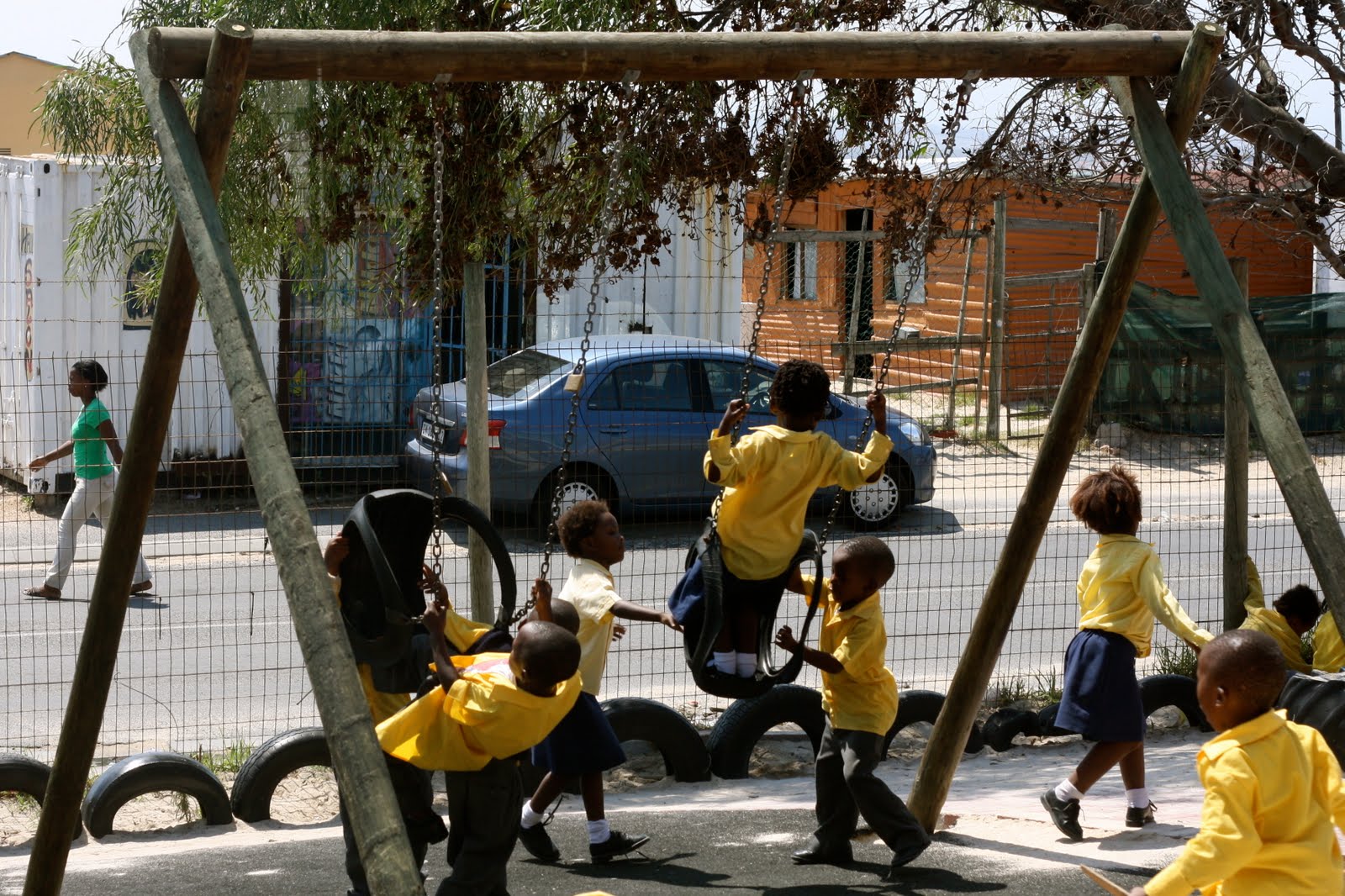
back to school • 18 comments • The last place we visited during our township tour was a day care/elementary school. This school is funded by school fees paid by parents in the township, and is considerably larger and more modernized than the school in the informal area of the township. The kids who were playing outside came and pressed themselves up against the window when they saw us. They seem to have this secret "thumb-shake", whereby they come and put their thumb against yours. We weren't fortunate enough to meet the kids while they were in class, since they were either napping or cleaning up their toys. We seemed to be joining them around lunch time. Their lunch was prepared with wholesome, locally sourced ingredients, and looked healthier than anything we've ever seen served in a school. The children were notably well behaved. Before we left, the all got together and sang us a few songs, and inundated us with high-fives.
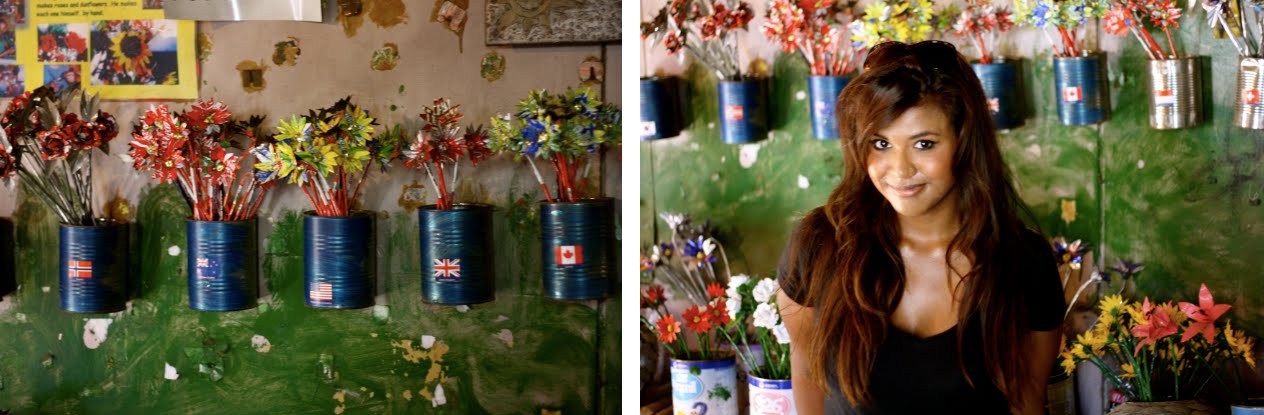
golden • 20 comments • The flower, pictured above, is made entirely of recycled cans by Khayelitsha resident, Golden Nongawuza. Our tour took us into Golden's workshop/gallery/home, where he treated us to a step-by-step demonstration of his technique for building one of his signature flowers. Years ago, while struggling to find work, Golden claims to have been sent a message from God, through his dreams, to find a solution to his poverty in a junkyard. Using aluminum cans, he started making a variety of flowers for tourists. As his technique has improved, so has his creativity. Sunflowers, roses, lilies, are a small sample of the variety of flowers on display in his workshop. Golden has earned enough from his flowers to send all his daughters to school, even though he himself struggles to read. He is assisted in his workshop by his daughter who opted not to go to school. The small space is filled with cans and paint supplies in addition to postcards and letters from fans all over the globe. He also has several posters of Obama on his walls! Golden and his family continue to live in Khayelitsha and fabricate the flowers. His English is limited, but he loves visitors from around the world.
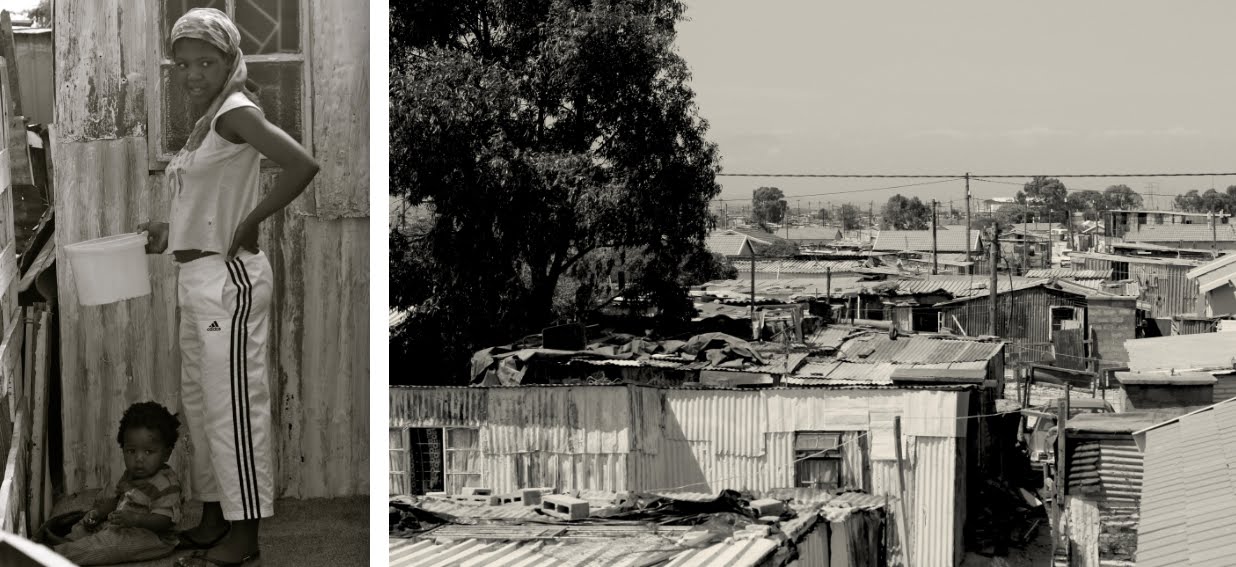
khayelitsha • 11 comments • Townships in South Africa were originally formed as forced settlements for non-whites during the apartheid era. Since then they have transformed into veritable cities of their own. The townships, as a whole, are often confused with the informal areas (i.e. slums) that are a part of it. These areas, and the whole townships themselves are often ignored and misunderstood. Our tour guide, Jenny (of Nomvuyo's Tours), started our tour with the informal area of the township. She introduced us to several residents, took us to meet the elementary school teacher, and explained the day-to-day hardships of the residents. As Cape Town's largest township, Khayelitsha benefits the most from visits from tourists. We met a couple, in Cape Town, who said they didn't bother with the tour because they didn't want "to do something that was depressing" while they were on vacation. In our experience the township was not depressing (we met some really interesting people), but it did reveal how much work South Africa still has to manage the countries balance of wealth. The township is not strictly residential. It contains barbershops, grocery stores, restaurants, churches, herbalists, etc... Children in the township have few options for elementary school. Luckily a local lady has invested her own meager funds to purchase a shack ($400, we think) to educate 2 dozen local kids. She's already purchased a larger shack to use as a schoolhouse, but is waiting for it to be finished (right now it only contains a loveseat): We also met various residents of the township. One man was very proud to show off his newborn daughter. Another woman was celebrating her birthday with a slice of cake: Ingenuity is a way of life in the townships. Some residents will pay for power and then resell it to their neighbours (to power satellite dishes, among other things). Nicknamed "spaghetti", the home-made infrastructure (jury-rigging cables between houses) is evident as you walk around: The houses tend to be quite small and don't accommodate space for a bathroom, but communal toilets are available: Jenny, our tour guide, has become friends with many of the locals and we felt that we were getting a more authentic experience than what some of the other companies may have offered. Apparently, one of the residents of the township asked why tourists wanted to see "poor people". Jenny assured her that it's not that tourists wanted to see that they are poor, but rather that we were visiting them because they are so rich in culture and community.